
TL;DR

Get home appliances delivered free with Prime
- Fast, free delivery on millions of items
- Prime Video, Amazon Music and more included
- Member-only deals all year
Homeowners without a chimney may still be able to install a wood-burning stove using a twin-wall flue routed through the home or up an outside wall. The route, clearances, building regulations and property restrictions need professional assessment; the source estimates a typical installation at £1,500 to £4,000.
Homeowners without a traditional chimney may still be able to install a log-burning stove by fitting a twin-wall flue to carry smoke outside, according to an Ideal Home report. The option is subject to building regulations, the building’s layout and any planning restrictions, so a chimney-free installation is not automatically suitable for every property.
A twin-wall flue is made from two metal tubes with insulation between them and functions as a purpose-built route for smoke and fumes. It can run inside the home and exit through the roof, or pass through an exterior wall and continue up the outside of the building. The report says an internal route may retain heat more effectively, while an external route can involve less work inside the home.
The report quotes Adam Pederson, managing director of Topstak, saying installations typically involve a certified installer surveying the proposed route, fitting the flue and issuing a Building Regulations compliance certificate. He estimates a typical installation at £1,500 to £4,000 including labour, with the final cost depending on the route’s length and complexity. He says many installations can be completed in a day, though the source does not specify a survey or project timetable for individual homes.
A flue can be incorporated into a false chimney structure, which can conceal pipework and create a chimney-breast appearance, according to the report. It also quotes Jon Butterworth, director at Arada, as saying the exposed flue needs to meet a minimum height of 4.5 metres, whether installed internally or externally. The correct requirements for a specific installation should be checked by a qualified professional rather than inferred from that general figure.
The Installation Depends on the Flue Route
The practical point for homeowners is that no existing chimney does not automatically rule out a log burner, but adding a flue is a construction project that needs to be planned around the building. Its route can affect cost, disruption, heat retention and where a stove can be placed. The quoted £1,500 to £4,000 range is an estimate from an industry source, not a guaranteed price; the report says complexity and flue length affect the bill.
Safety and compliance also shape the decision. The proposed route must take account of building regulations and clearances from combustible materials, and the flue’s termination point and surrounding materials need to be suitable. Listed buildings or homes in conservation areas may face planning considerations. An on-site assessment is needed to establish what applies to a particular address.
For homes where a flue cannot reasonably be added, the report identifies bioethanol fires as a separate option. They do not require a chimney or flue, according to Butterworth, but he says they generally produce less heat than wood- or multi-fuel stoves and are often chosen for ambience rather than as a main heat source. That makes them an alternative, not a like-for-like substitute for a wood burner.
As an affiliate, we earn on qualifying purchases.
Alternatives to an Existing Chimney
The report addresses a common constraint in homes without a chimney breast: a wood-burning stove still needs a way to discharge smoke and fumes safely. Its proposed solution is a twin-wall flue system, rather than operating a log burner without a flue. The system can be routed through the building or along its exterior, depending on what the property and installation allow.
There is also a design choice. A false chimney can provide a setting for the stove and hide some of the flue, while an exposed flue makes the pipework visible. According to the report, the decision should account for technical requirements as well as appearance, including the route, clearances and the suitability of the materials where the flue exits.
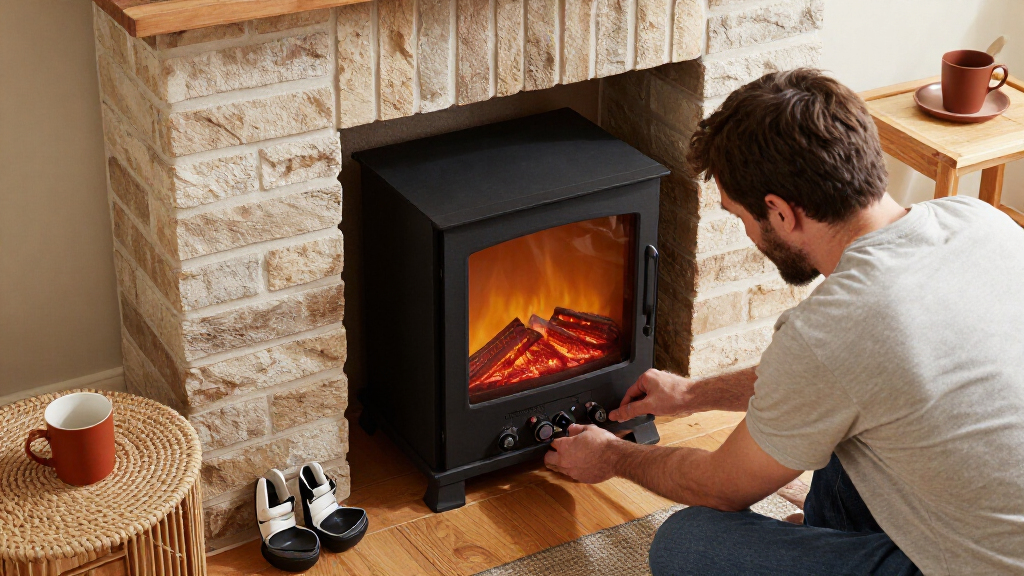
For people unable to add a flue, the supplied report describes bioethanol as a vent-free option because it burns liquid fuel and produces no smoke, soot or ash. The source says these fires tend to provide less heat and may cost more per kilowatt hour than seasoned logs. It also begins to mention electric stoves with flame effects, but the supplied material does not include further details about them.
“A twin-wall flue system is the go-to solution for wood-burning stove installation in a home without a chimney.”
— Adam Leah, founder and director of Direct Stoves, as quoted by Ideal Home
twin wall flue kit for wood burning stove
As an affiliate, we earn on qualifying purchases.
As an affiliate, we earn on qualifying purchases.
A Site Survey Determines Feasibility
The report does not provide a publication date, regional breakdown of regulations or a complete technical specification for a compliant installation. Its 4.5-metre flue-height statement is attributed to an industry representative, but the article does not set out how the requirement applies to every building or installation. Readers should not treat that figure alone as approval of a proposed design.
Whether a stove can be installed, where it can go and what it will cost remain property-specific questions. The supplied material does not say whether planning permission would be required in any particular case, nor does it give a detailed price breakdown. It also does not provide further information on the electric-stove alternative mentioned near the end of the source.
wood stove hearth heat resistant floor protector
As an affiliate, we earn on qualifying purchases.
As an affiliate, we earn on qualifying purchases.
Get the Route Checked Professionally
The next step for an interested homeowner is to have the property and proposed flue route assessed by a qualified stove installer or HETAS-registered engineer, as described in the report. That assessment can identify a viable internal or external route, check clearances and building requirements, and establish whether the property’s status creates planning constraints.
Homeowners should request a project-specific quotation and ask what compliance documentation will be provided. Until a professional has surveyed the site, the cost, installation time and suitability of a chimney-free log burner remain estimates rather than confirmed outcomes.
wood burning stove carbon monoxide alarm
As an affiliate, we earn on qualifying purchases.
As an affiliate, we earn on qualifying purchases.
Key Questions
Can a log burner be installed in a home without a chimney?
Possibly. The report says a twin-wall flue can carry smoke outside through the roof or along an exterior wall. The building and proposed route must be assessed for compliance and safety.
How much does a twin-wall flue installation cost?
Adam Pederson of Topstak estimates a typical installation at £1,500 to £4,000 including labour. He says the price depends on the flue’s length and the project’s complexity; this is not a fixed quote.
Can the flue run outside the house?
Yes. The report describes an option where the flue passes through a wall and continues up the building’s exterior. Whether that route works depends on the property, required clearances and applicable rules.
What can be used if a flue cannot be installed?
The report identifies bioethanol fires as an option that does not need a chimney or flue. It says they generally provide less heat than wood- or multi-fuel stoves and are often used for ambience rather than as a main heat source.
Source: rss
Halloween Picks
halloween
As an affiliate, we earn on qualifying purchases.